Helicopters in the Night, Trump Claims California Primary Stolen, & PEADs

Flash-bang . . . rata-tat-tat.
Those were the overnight sights and sounds that dominated a Pasadena neighborhood and three other communities in Los Angeles County last week as U.S. Army soldiers rappelled from helicopters to storm empty buildings during joint urban military training exercises with the Federal Bureau of Investigation.
FBI spokesperson Laura Eimiller told the New York Post the exercises are part of routine preparedness efforts that involve federal, state, and local partners. Moreover, because of upcoming special events in the area—including the FIFA games, the Super Bowl, and the 2028 Summer Olympics—Eimiller said local residents can expect more exercises.
However, while she called the exercises a partnership, Pasadena City Council members were caught off guard. Even though the Feds told the Pasadena Police Department about the plan months ago, Pasadena elected officials learned about it only a few hours before the exercise began.
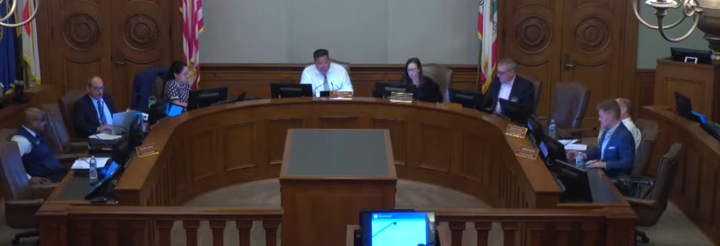
Pasadena Councilmember Rick Cole streamed the events the evening of June 3 and 4, which went into the wee hours.
Mayor Victor Gordo told the Los Angeles Times, “It’s troubling and disappointing the federal government would not provide the leadership of this city information to share with our constituents, particularly because the same neighborhood was significantly impacted by the Eaton fire.”
The Trump Connection
Earlier news reports said federal officials did not provide any specific reasons for the exercises, which also occurred in Irvine, Long Beach, and the City of Industry. However, many of the stories noted President Donald Trump told top military brass flown in from around the world to Quantico, VA, last year that “we should use some of these dangerous cities as training grounds for our military.” Irvine is one of the safest cities in the nation.
The military exercises come as Los Angeles marks the one-year anniversary of the Feds’ immigration raids. Also, before the exercises in Industry and Long Beach on June 4, Trump accused the Democrats of stealing the California primary election, although he provided no evidence.
PEADs & the Mid-Term Election
And that brings me to what I really sat down to write about, PEADs, also known as Presidential Emergency Action Documents or Directives, and the coming 2026 mid-term election this November.
For those who missed it, check out “Emergency Planning: The President Is Preparing to Challenge 2026 Midterms. The Country Can Still Act to Protect Them.” It’s published in The Washington Spectator and written by Jonathan M. Winer, a former senior State Department official. He’s a member of The Steady State, a non-partisan group dedicated to preservation of law that has 400 members who spent their careers at the CIA, FBI, Department of State, Department of Defense, and Department of Homeland Security.
Winer marches the reader through the history of Presidential Emergency Action Documents, which every President since Dwight Eisenhower in the 1950s has had at the ready in case of a nuclear war, foreign attack, or large-scale domestic upheaval. These top-secret documents provide the President with the power to override legal requirements, detain individuals, censor the media, seize property and financial assets, and direct executive branch agencies, including the military, to act without prior judicial review. No President has invoked the documents.
Now as we all know, Trump has a history of trying to control election outcomes, which culminated in 2021 with the invasion of the Capitol in an attempt to shut down Congressional certification of the 2020 Presidential election. Since then, Trump and his MAGA team have worked to intimidate state election officials, gerrymander districts to eliminate Black representation in Congress, restrict voting by mail, require IDs at polling places, and remove people from voter registration rolls. Armed MAGA enthusiasts have even stalked polls on election day and made death threats against state officials.
But what if there’s still an overwhelming Democratic turnout in November and it becomes apparent, even after all the MAGA efforts to engineer the outcome, that Democrats will take over Congress? This, according to Winer, is where PEADs are likely to come into play.
First, according to Winer, Trump likely would declare that the election was rigged and order federal authorities to launch an investigation, beginning with actions to “secure ballots, voting records, or related materials in contested jurisdictions.” Enter federal troops, descending from helicopters on vote counting centers to halt the count and seize the ballots.
In the interim, he would tell Republican Congressional leaders to organize their chambers assuming a Republican majority and to not seat Democrats elected in contested districts and states.
Next, Trump would respond to the inevitable uproar and street demonstrations by investigating the organizers and deploying the military in U.S. cities. Along the way, he likely would sign the PEADs, according to Winer. While their contents are not known, previous PEADs outline the power to immediately detain people deemed dangerous, restrict movement, seize property, and take over communications systems, including the internet. Trump also could take control of vehicles, equipment, communications devices, and financial assets. Any suspicion that the election was influenced by foreign agents likely would accelerate his exercise of such powers. (For deep background on PEADs see The Brennan Center’s page on the documents.)
Guarding Against Use of PEADs
To prevent Trump from succeeding in controlling the election outcome, Winer advises that Governors and Secretaries of State should be working already to pre-draft judicial complaints for immediate filing, coordinate multi-state litigation, position state and local law enforcement forces to protect election infrastructure and secure the chain of custody of ballots, and to work with prosecutors and law enforcement officers “to define how state criminal law applies to interference with election administration.”
Meanwhile, Civil Society and the media, argues Winer, should be preparing now to witness, document, and distribute “an immediate factual record”—similar to what communities have done to counter federal immigration raids—of any federal interference at the polls or vote counting centers. “The mechanism is straightforward,” according to Winer, “visibility changes behavior.”