In the AI Era, Pasadena Begins Zoning for Data Center Projects
The city of Pasadena is in the early stages of developing a zoning ordinance to govern data center siting. After the Municipal Services and Housing, Homeless, & Planning Committees initially discussed data center zoning in recent weeks, council members directed staff to bring the issue of data center zoning to the city’s Planning Commission.
Pasadena is moving on data centers after Amazon Web Services late last year paid $79 million for a 168,000 square foot building that sits on eight acres in the Pasadena Tech Center. Though AWS has not publicly detailed its plans for the facility, area realtors and business leaders have telegraphed in the business press that the company plans to build a quantum data center in the Tech Center. Business and tech leaders note that Amazon has been engaged in research and development of quantum computing at a small data center at Cal Tech and now is ready to scale up its proprietary quantum chip technology (https://www.youtube.com/watch?v=jYzVeLyTPOc).
The company early in March said that it will expand its research and development effort at the facility and work with the city on permitting (https://pasadenanow.com/main/facing-public-speculation-and-opposition-amazon-clarifies-there-are-no-data-center-plans-for-pasadena-building).
Amazon’s purchase of the Pasadena Tech Center complex comes amid the rapid growth of energy and water hungry data centers that’s creating increasingly publicized environmental and community impacts. With data centers essentially serving as the gray matter of emerging artificial intelligence, public concern over the rush to build the facilities is reaching a fevered pitch. Aside from the economic and job impacts of the facilities, key concerns include increased use of fossil fuels for generating electricity, associated increases in greenhouse gas emissions, electricity price hikes due to the need to increase the capacity of the grid to deliver power to the centers, drawdown of water resources, particularly in the arid Southwest, air pollution from increased fossil fuel power generation and backup diesel generators, and noise pollution from cooling and air conditioning systems, as well as backup diesel generators (https://www.eesi.org/data-center-impacts). Data centers are also enabling and fueling the emergence of the surveillance state.
Often overlooked and key to any zoning ordinance is the potential of data centers to create catastrophic accidents that affect both workers and surrounding communities. This danger stems from the large amount of toxic metals used in banks of computers and the wiring that ties them together, the increasing use of large lithium-ion battery systems for backup power, and use of large-scale cryogenic cooling systems at emerging quantum data centers, like the one Amazon appears to be planning in Pasadena.
Dangers of Cryogenic Cooling for Quantum Data Centers
That’s why in any data center zoning ordinance, Pasadena should establish an additional facility definition beyond the three (“data center,” “data center, limited,” and “data center, general”) outlined in the staff presentation to the Housing panel. Specifically, the city should establish a fourth definition, namely, “data center, quantum.” Quantum data centers, in their infancy, employ game-changing cryogenic cooling technology to dramatically increase both the speed and capacity of data processing by maintaining the operation of chips at temperatures near 0 degrees Kelvin, or absolute zero.
Doing this requires using liquefied gases, typically either helium or nitrogen, which must be delivered to the facility, stored, and maintained in liquid form onsite. While cryogenic cooling is used in a variety of settings without incident, when accidents with the liquid gases do occur, they can be catastrophic. Below, for instance, is an illustrative list of accidents that have occurred with cryogenic nitrogen and hydrogen, including in California:
- Foundation Food Group, January 28, 2021, Gainesville, GA: Six workers were killed and four others were seriously injured due to an accidental release of liquid nitrogen, which is used at the plant to flash-freeze chickens (https://www.csb.gov/csb-releases-final-report-into-2021-fatal-liquid-nitrogen-release-at-foundation-food-group-facility-in-georgia/).
- Millenium Cryogenics, November 15, 2018, Edmonton, Canada: Three workers were asphyxiated at the company’s plant, which uses liquid nitrogen to clean and treat oil drilling devices, when levels of the gas displaced oxygen from their workplace (https://www.cbc.ca/news/canada/edmonton/millennium-cryogenic-technologies-accident-leduc-death-fatal-1.4927289).
- Truck accident, July 26, 2017, Baldwin Park, CA: A tanker truck overturned and its helium tank ruptured, requiring fire department response. Fortunately, nobody was injured (https://abc7.com/post/helium-tanker-overturns-in-crash-on-eb-10-fwy-in-baldwin-park/2250584/).
- UC Berkeley, July 31, 2008: Berkeley, CA: A Tesla magnet catastrophically failed when its over-pressurized liquid helium cooling vessel ruptured in the night, releasing a catastrophic level of gas into a lab. The pressure relieve valve failed to work because it iced over. Fortunately, the accident occurred when the lab was unoccupied (https://ehs.berkeley.edu/news/superconducting-magnet-explosion).
- Isotec, September 21, 2003, Miami Township, OH: A cryogenic nitric oxide distillation column at this biochemical facility exploded after a pressure buildup causing extensive damage to the facility, nearby homes, and the evacuation of 2,000 residents within a 1-mile radius for more than 24 hours.
Data Center Battery Backup Hazards
Data centers typically have backup power, often redundant, to keep operating during blackouts on the grid. The first line of defense for centers, particularly in polluted airsheds like the South Coast Air Basin, often are battery backup systems. These systems typically are sized to deliver large amounts of power for several hours, which in short blackouts makes it unnecessary to resort to a bank of diesel internal combustion engines or natural gas turbines to supply electricity. Any zoning ordinance developed by Pasadena for data centers needs to make sure that not only fossil fuel backup generation systems are carefully examined, but also backup battery systems.
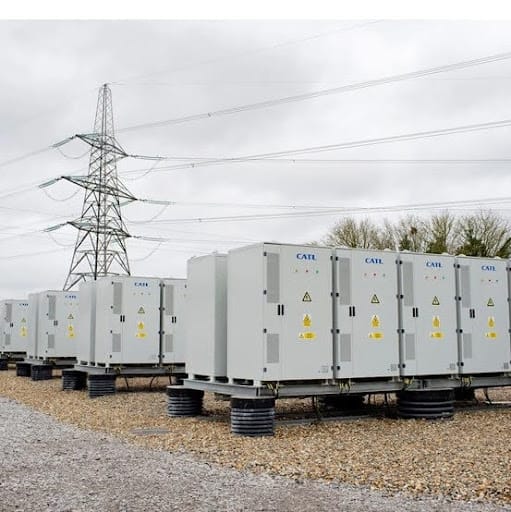
A proposed data center in Monterey Park, for instance, would have required the equivalent of a transmission-scale 50 MW power supply capacity. Below is a picture of a 50 MW utility-scale battery backup system built by SMS for National Grid in in England (https://www.smsenergy.com/insights/sms-energises-50mw-battery-energy-storage-site-in-cambridgeshire/). Such 50 MW utility-scale battery backup systems use more than 100 tons of toxic metals, such as lithium, cobalt, and nickel. When fires occur, these metals are incinerated and dispersed widely through the environment.
Below is data from the Electric Power Research Institute on the number of utility-scale battery backup failure incidents that have occurred in recent years. These failures involve fires and explosions.
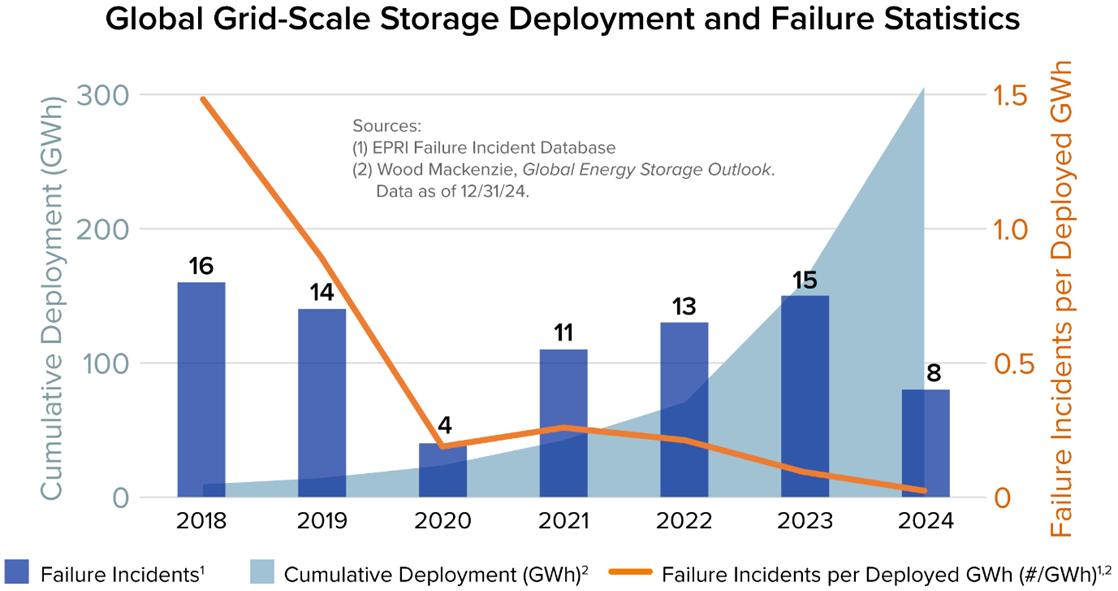
EPRI also lists failures of non-utility-scale systems used, for instance, at solar electric vehicle charging stations, data centers, and other facilities. Overall, EPRI lists 107 incidents (https://storagewiki.epri.com/index.php/BESS_Failure_Incident_Database), including a battery backup system fire at a data center in Hillsboro that burned for 5 hours (https://www.kptv.com/2025/05/23/fire-hillsboro-data-center-burns-5-hours/).
So far, the biggest utility-scale battery backup system incident in history was the major fire at a Vistra facility at Moss Landing in Monterey County. The fire burned for days, causing people to flee homes and nearby farms. When the smoke finally cleared, scientists found it had deposited an estimated 55,000 pounds of toxic metals in the adjacent wetland area (https://theconversation.com/when-the-worlds-largest-battery-power-plant-caught-fire-toxic-metals-rained-down-wetlands-captured-the-fallout-268848).
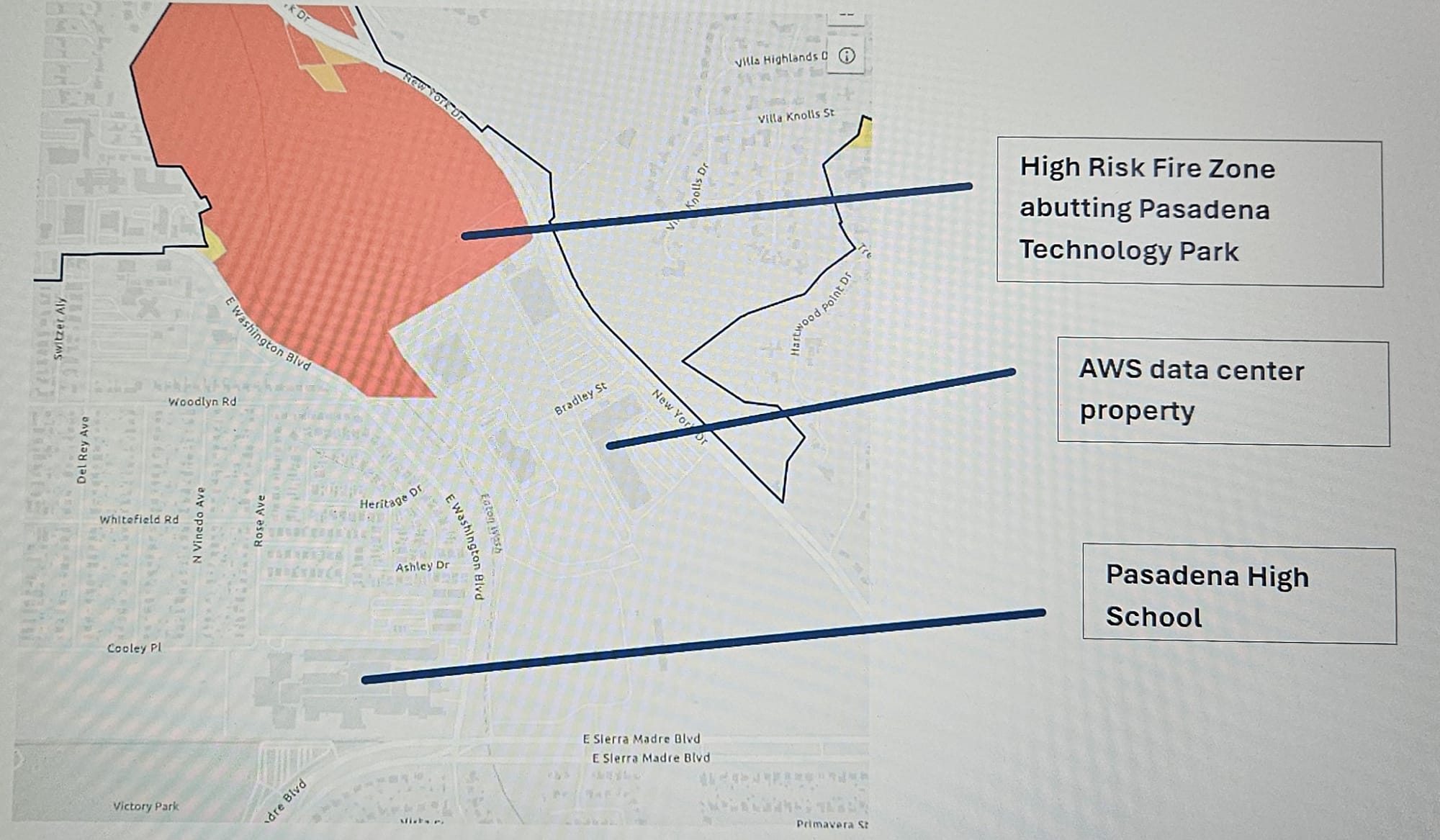
These accidents illustrate why the city must exercise the utmost caution in allowing battery backup at data centers next to homes, schools, healthcare facilities, and neighboring businesses, and next to or in high-risk fire zones like Eaton Canyon.
Wildfire Risk at the Pasadena Tech Center
Amazon Web Services recently purchased a property in the Pasadena Tech Center at 2964 Bradley Street to ostensibly create a quantum data center (https://www.costar.com/article/1307131548/amazon-buys-property-in-los-angeles-as-it-broadens-us-data-center-strategy). The facility, which will likely contain chips, wiring, cryogenic cooling equipment and gases, and could include a large battery backup power supply system, could contain tons of toxic metals and plastics. The Tech Center immediately abuts a Very High-Risk Fire Zone that ends behind one of the buildings in the center and runs up the Eaton Wash into Eaton Canyon (https://www.cityofpasadena.net/fire/fire-hazard-severity-zones/). The center, including the AWS-owned building, is immediately across the wash from Pasadena High School and the California Rose Court housing development. Eaton Canyon, the ignition point for the massive wildfire that burned down more than 9,000 structures in 2025, has a history of burning. A 1993 blaze in Eaton Canyon burned down over 100 homes (https://en.wikipedia.org/wiki/Eaton_Canyon). In 1979, a wildfire burned through Eaton Canyon and much of the surrounding area (https://www.ecnca.org/history-of-eaton-canyon/). If a data center in the Pasadena Tech Center were to burn in a wildfire (which generally occurs when winds blow out of the north to northeast), it would spread ash laden with toxic metals downwind to Pasadena High School and nearby homes.
Conclusion
The environmental hazards presented by data centers are still coming into focus. Pasadena must consider these hazards very carefully and fully involve the community as it weighs creating a zoning ordinance for data centers.